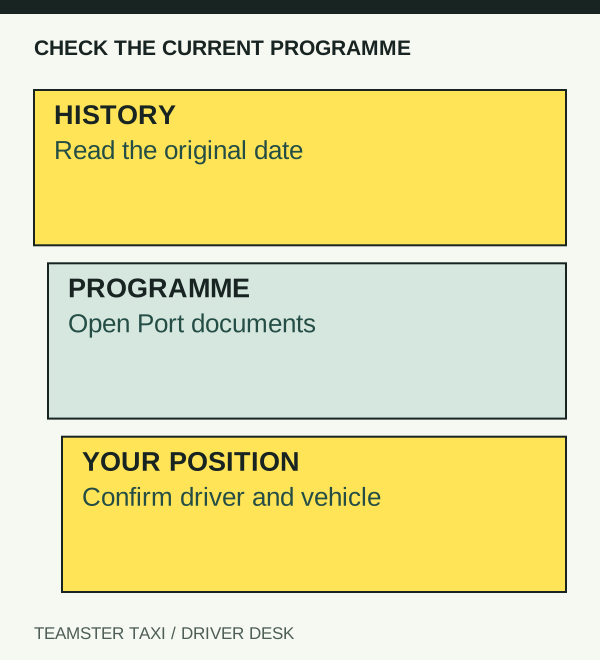
Original explanatory graphic: Teamster Taxi editorial. Source context is linked below.
Read the diagram in words
The airport record has three layers: the historical contract notice, the current Port programme and the driver’s own confirmed operating position.
Start at the Port’s programme page
Airport taxi work involves a programme and operating instructions specific to SEA. The Port of Seattle publishes an On-Demand Taxi Program page with documents for owners and drivers. Begin there rather than treating a historic operator name, contract article or photograph as permission to work at the airport.
The Port’s current page describes a Taxi Driver Portal requirement and links its terms and programme documents. Review them at the Port. This site does not create an account, register a payment card or accept terms for you.
Make a document trail before the trip
- Identify whether the question concerns the vehicle owner, the driver or the dispatch/operating arrangement.
- Open the current programme page and note the document titles and dates.
- Compare the stated requirements with the exact driver and vehicle involved.
- Use the Port’s published contact route for an unresolved operating question.
- Keep the answer and relevant instructions with your own records.
Keep passenger directions separate
The passenger taxi page explains where travellers find taxis and how to obtain assistance. It is useful for giving a passenger clear directions. It does not establish a driver’s individual eligibility or replace the operating instructions.
When explaining a pick-up, ask which terminal area or location the passenger is using, refer to the Port’s own map and avoid making up a curbside instruction. Check current notices if the situation has changed.
Read the 2016 record accurately
The September 2016 contract update reported protections and plans from that period. The later 2020 trip-fee article documents another episode. Neither is a statement of the current operating contract, current charges or an individual entitlement.
A completed example
A fictional driver finds an old news story saying an operator would retain drivers for a set period. The driver records its 2016 date as history, then checks the Port’s current programme and asks about the actual vehicle and driver arrangement. The outcome is a specific written question and the current source documents, not a conclusion that the old promise automatically applies today.