Your period, your inputs
USD throughout. All fields are required; enter 0 for an unused cost. Nothing is uploaded or saved.
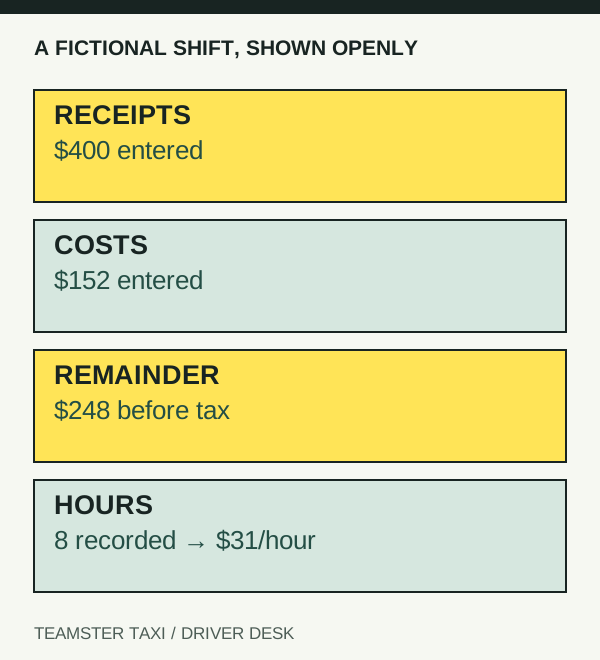
Original explanatory graphic: Teamster Taxi editorial. Source context is linked below.
Read the diagram in words
Fictional example: $400 receipts − $152 entered costs = $248 before tax and unentered costs. Divide by eight recorded hours to obtain $31 per hour for that example.
Receipts are not take-home pay
Enter one consistent period. The calculator subtracts the costs you enter from the receipts you enter, then divides the remainder by your total recorded work hours. Waiting time and other work can matter when you choose those hours. Do not silently use only the time a passenger was in the vehicle.
All opening values below are a fictional worked example. They are not Seattle rates, a wage claim, a market forecast or a promise of earnings.
What the result includes
The result includes only the entered lease, fuel or charging, dispatch, tolls and other costs. Use the same currency and period for every field. Gross receipts of $400 minus $152 of entered costs leave $248 before tax and any costs not entered. Over eight hours, that is $31 per recorded hour for this invented example.
A negative result is possible and is shown as a loss on the entered basis. The calculator does not add a tax estimate, determine worker status, calculate a statutory minimum payment or advise you to accept a lease.
Keep the record behind the number
- Choose the period and record its start and end.
- Keep evidence of receipts and identify tips or reimbursements consistently.
- Match each cost to that period; do not subtract a weekly charge as though it were a daily one.
- Record total work hours on the basis you intend to compare.
- Review missing costs and explain the basis beside the result.
For a business record, keep the supporting documents and consult the relevant official guidance or qualified adviser about your own reporting obligations. This site does not receive your calculator entries.