Original explanatory graphic: Teamster Taxi editorial. Source context is linked below.
Read the diagram in words
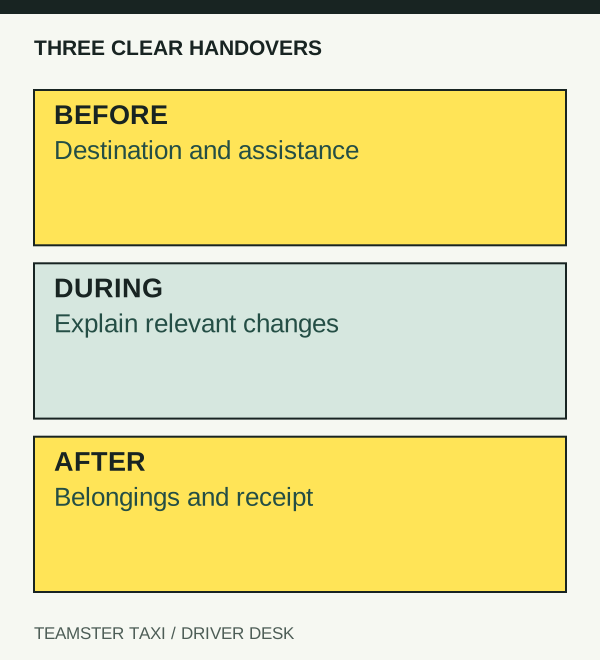
A passenger journey has three handovers: agree the destination and assistance; explain relevant changes; finish with belongings, receipt and the right follow-up route.
Before moving
Confirm the destination in a way the passenger can recognise: the street address, named entrance or other clear location. If a name is ambiguous, resolve it while safely stopped. A passenger should not have to guess which destination you understood.
Ask whether assistance is wanted before taking hold of a person, mobility aid or luggage. Let the passenger explain what is useful. If you cannot safely provide the requested service, use the responsible dispatch or assistance route instead of improvising equipment or handling techniques.
Explain what affects the journey
Describe relevant payment arrangements or an unclear destination before the trip begins. If a route or drop-off changes, give a plain explanation when it is safe to do so. Do not promise a journey time that traffic and road conditions may change.
Seattle’s driver guidance includes courteous service, vehicle condition, dispatch use and receipt production among operating responsibilities. Use the complete official requirements for the applicable service; this conversation checklist does not replace them.
At the destination
- Stop in an appropriate place and confirm the intended destination has been reached.
- Make the payment and receipt process clear.
- Ask the passenger to check belongings before leaving.
- Give the appropriate dispatch or lost-property contact if an issue remains.
- Record an operational problem through the responsible agency’s process.
A practical example
A passenger asks for “the airport hotel” without an address. A useful response is: “Which hotel name and entrance would you like? We can confirm the address before we leave.” It avoids an assumption without blaming the passenger. The same approach works for hospitals, large campuses and buildings with several entrances.
What to keep from the training archive
The historical hospitality training record belongs to its original date. The archive shows why customer service mattered to drivers. It does not advertise a current course, appointment, price or certificate.
Use the pre-shift check to prepare the vehicle and the contact desk to find the organisation responsible for a specific issue.